Few materials carry as much quiet authority as stone. It is cool to the touch in the heat of the afternoon, it takes the light differently from hour to hour, and it ages with a grace that few manufactured surfaces can match. It is also unforgiving of a poor decision. Once laid, a stone floor is with the house for generations.
In a tropical residence, choosing stone is as much about climate and use as it is about colour and pattern. Humidity, heavy rain, bare feet and the edge of a pool all ask different things of it.
A short vocabulary
Each stone speaks in its own way:
- Travertine — warm, porous and gently textured, with a natural calm that suits verandahs and living spaces. Its voids may be filled or left open, which changes both its look and its care.
- Limestone — soft in tone and even in grain, quietly elegant indoors. Some limestones are dense and hard-wearing; others are softer and better kept away from heavy traffic and water.
- Marble — the most expressive, with veining that can be dramatic or barely there. Beautiful in bathrooms and principal rooms, but sensitive to acids, from citrus to certain cleaning products.
- Granite — dense, durable and resistant to staining, ideal for kitchens, driveways and exposed exterior surfaces.
- Terrazzo — made rather than quarried, with chips of stone set in a binder and ground smooth. It can be composed for a particular house, and it is remarkably durable.
Honed or polished
A polished finish reflects light and deepens colour, but in a humid climate it can feel slick, and every mark shows. A honed finish, smooth but matte, reads as softer and more natural, and is kinder underfoot. For most of a tropical house we favour honed or lightly brushed surfaces, keeping polish for places where it can be admired rather than walked on in wet feet: a vanity top, a wall, a table.
Near water, the decision is not aesthetic. Pool surrounds, outdoor showers, bathroom floors and any surface that meets driving rain need a textured finish — flamed, bush-hammered, sandblasted or brushed — chosen for grip first. We test samples wet, not dry, because that is how they will be used.
Book-matching and the direction of the vein
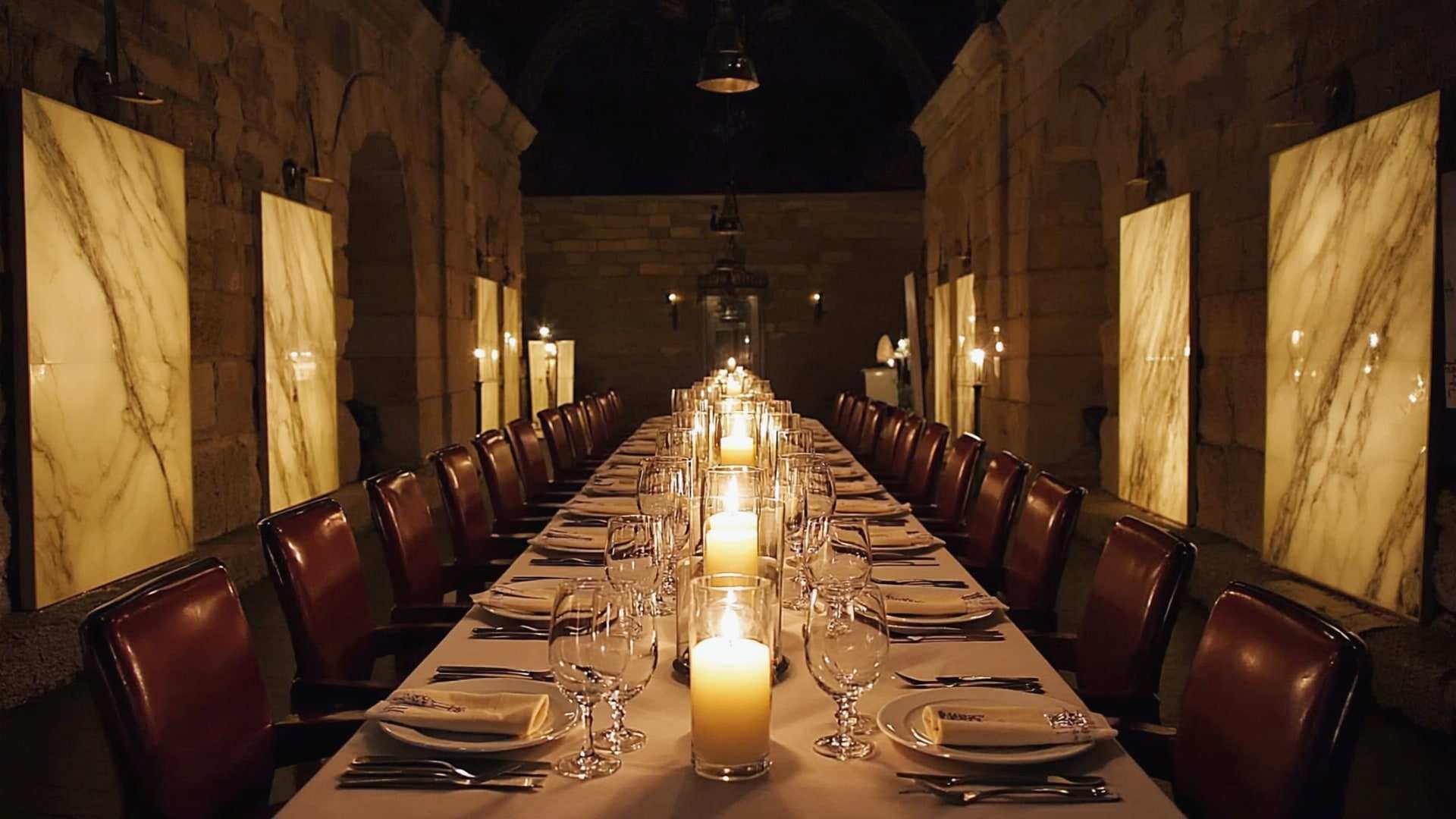
With veined stone, the way slabs are cut and placed is its own design. Book-matching opens consecutive slabs like the pages of a book, so the veining mirrors across a joint and forms a single figure on a wall or behind a bath. Vein direction matters on floors too: running along the length of a room can lengthen it, while a careless change of direction at a doorway can quietly spoil it.
This is why we lay out slabs on paper and on the ground before any are cut, and why we number each piece to its place.
Choosing slabs in person
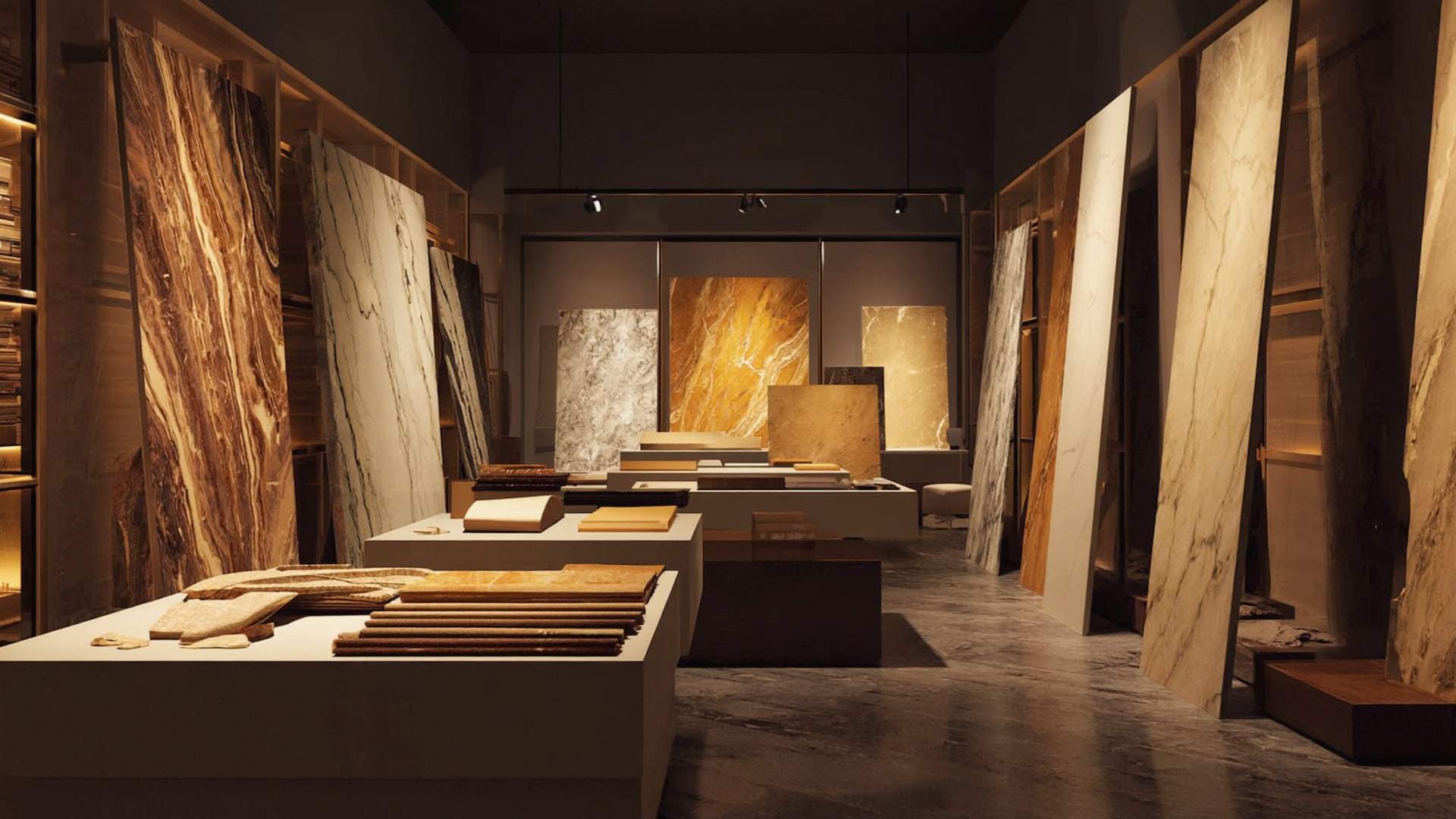
No photograph fully captures a slab. Colour shifts under different light, and two blocks from the same quarry can differ considerably. Wherever possible, the principal slabs for a residence are selected in person, with the client and the designer together, and reserved for the house. What is chosen is what is laid.
Why stone is ordered early
Natural stone of real quality is not a stock item. Quarrying, cutting, finishing, shipping and fabrication take time, and the best blocks are often spoken for. We treat stone as a long-lead item, selecting and ordering it well before it is needed on site, so the programme never forces a compromise at the last moment.
Mock-ups, sealing and care
Before any floor or wall is laid in full, we build a mock-up: a section of the real stone, with the real joint, finish and setting, in the light it will live in. It is the moment to see the whole before committing to it, and it becomes the reference against which the work is checked.
Most natural stone benefits from a penetrating sealer suited to its porosity and finish, renewed as it wears. Care is simple but particular: pH-neutral cleaners, prompt attention to spills, and felt beneath furniture. We set this down in the Quality Dossier at handover, so that the stone can be looked after properly by whoever cares for the house, for as long as it stands.
All journal essays